
Human‑First Care
Staff complete required background checks, onboarding and ongoing training, with certifications appropriate to their roles.
Ready when you are. Audio starts when you choose Listen.
Where we began
Launched in Franklin and Delaware Counties, focused on stabilizing operations and providing person-centered support at home and in the community.
Introduced sensor-based Remote Support across Ohio, including check-ins without cameras ("Tech Lends a Hand," Columbus Dispatch).
Joined Ohio's Technology-First task force and stood at Governor Kasich's signing of the executive order to embed assistive tech in support plans ("Kasich: Technology such as 'Milo' can improve lives," Columbus Dispatch).
Ohio State Engineering featured our founder's work using assistive technology and collaboration with student capstone teams (OSU Engineering).
Today, Hybrid Support combines remote and in-person help for people living alone, with family, or preparing for a change in living arrangements. Equipment and service hours are chosen through each person's support plan.
"The technology keeps the line open, but it's our people who make the difference."
People behind the support
Make a difference
Help people with intellectual and developmental disabilities live safely and independently — on their own terms. Build your career with flexible schedules, continuous training, and a team that pairs compassionate care with technology that makes a real difference.
Staff complete required background checks, onboarding and ongoing training, with certifications appropriate to their roles.
When your routines or living arrangements change, we review the equipment, coverage and support you need.
We help you and your service coordinator understand how Medicaid waiver funding and authorizations relate to your support plan.
Blend on‑site support and remote coverage to fit budgets, goals, and schedules.
Work toward everyday goals, review what is helping, and adjust support as your needs change.
We listen, respect your choices, and treat people with dignity.
Clear service schedules, response procedures and backup arrangements in each person's plan.
We support you as you practice the skills that matter to you.
We review technology alongside the people, routines and support it needs to serve.
Clear communication with you, your chosen supporters, service coordinators and staff.
Your goals, preferences and chosen supporters help shape your support plan.
Ohio State Engineering featured our founder's assistive-technology work and student capstone collaboration.
Collaborative care planning and funding coordination.
Staff complete the background checks and screening required for their roles before working independently. Training and certifications, such as CPR and First Aid, depend on the work they perform.
Funding options include Ohio Medicaid waivers—Individual Options (I/O), Level One and Self-Empowered Life Funding (SELF)—as well as county funds and private pay. The service must fit your eligibility, plan and authorization; contact us to discuss your situation.
Technology is one part of the support plan. Staff provide check-ins and respond during your authorized service hours, with in-person assistance and backup arrangements as specified in your plan. Sensor-only setups and optional authorized audio or video support are different configurations.
In many cases, but continuity depends on the new location, staffing, equipment and service authorization. Contact your care coordinator before a move so you can review what is possible and plan the transition.
Yes, when staffing allows—ask a Care Coordinator about current openings and availability.
Take the next step
A conversational guide to About Us, including descriptions of the page’s imagery. You can also use the page headings, links, and your own assistive tools.
Choose Listen to hear this guide. A floating player lets you pause, choose a chapter, seek within a chapter, and adjust playback speed. Close the player to stop listening. Audio starts only when you choose to play it.
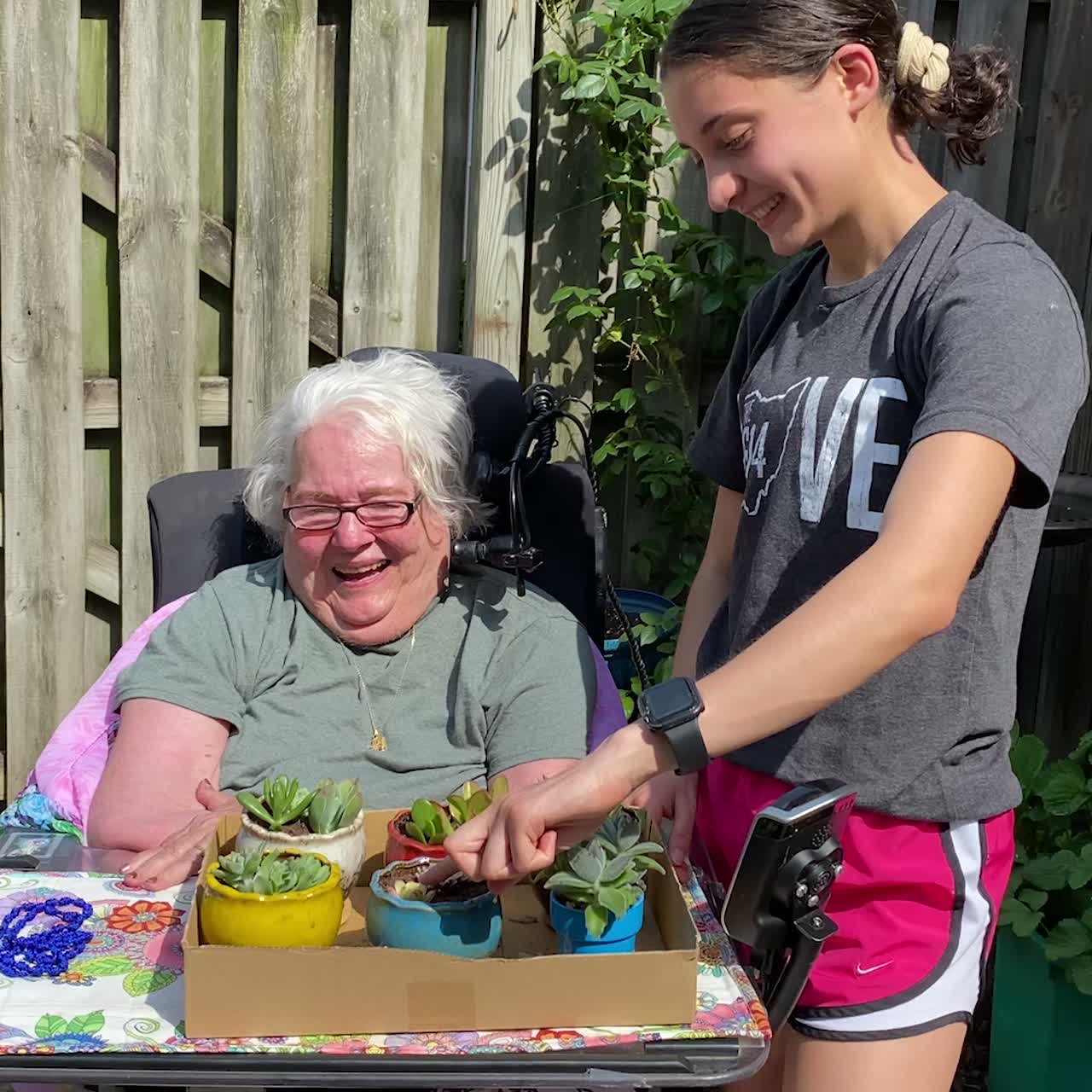
You're on the About Ohio At Home page. This audio guide is part of Ohio At Home's built-in accessibility features. The page explains how people and technology work together to support your choices, daily routines, and independence. At the top, a photograph shows two people outdoors beside a wooden fence. One is seated in a wheelchair at a table, smiling, while the other leans toward a tray of small potted plants. The plants are in colorful pots, and greenery climbs the fence behind them. Below this opening scene, the page introduces Ohio At Home's story, team, values, and answers to common questions. The opening scene can play as a silent animation or remain a still image, depending on your motion preferences. You can pause or play it with the animation control.
Ohio At Home's timeline begins in 2011, when the organization launched in Franklin and Delaware Counties. The early focus was stabilizing operations and providing person-centered support at home and in the community. In 2015, Ohio At Home introduced sensor-based Remote Support across Ohio, including check-ins without cameras. The page links to a Columbus Dispatch article called Tech Lends a Hand about this work. In 2018, Ohio At Home joined Ohio's Technology-First task force and attended Governor Kasich's signing of an executive order to include assistive technology in support plans. A second Columbus Dispatch article is linked for that milestone. In 2020, Ohio State Engineering featured the founder's assistive-technology work and collaboration with student capstone teams. The 2026 entry describes Hybrid Support for people living alone, with family, or preparing for a change in living arrangements. Equipment and service hours are chosen through each person's support plan. The section includes a statement from Ali Rahimi, Founder and Chief Executive Officer: The technology keeps the line open, but it's our people who make the difference.
Several kinds of work contribute to your support. Remote Support Associates provide scheduled check-ins, monitoring, and coaching, and escalate concerns according to each person's plan. Direct Support Professionals give hands-on help with daily living, skill building, and community outings. Care Coordinators organize schedules, explain funding steps, and help people and their chosen supporters get started. Clinical Advisors provide nursing guidance, behavior-support expertise, and staff training. The back-office technology team maintains the platform used to support this work. The page also invites people interested in this work to explore careers, including training and scheduling options. Specific openings and working arrangements are described on the Careers page.
The section called Why Choose Us describes how support is planned. Staff complete required background checks, onboarding, and ongoing training, with certifications appropriate to their roles. When your routines or living arrangements change, the team reviews the equipment, coverage, and support you need. Ohio At Home helps you and your service coordinator understand how Medicaid waiver funding and authorizations relate to your plan. Hybrid Support can combine on-site and remote help around your budget, goals, and schedule. Everyday goals are reviewed with you so support can change as your needs change. Five values guide this approach. Compassion means listening, respecting choices, and treating people with dignity. Reliability means clear service schedules, response procedures, and backup arrangements in each person's plan. Empowerment means supporting practice of the skills that matter to you. Innovation means considering technology alongside the people and routines it needs to serve. Transparency means clear communication with you, your chosen supporters, service coordinators, and staff.
The Community Connections section starts with people receiving support and their chosen supporters. Your goals and preferences help shape your plan. It also describes Ohio State Engineering's coverage of the founder's assistive-technology work and student capstone collaboration, and work with local county boards on planning and funding coordination. The following section, People and Purpose, brings the focus back to everyday life: support at home and in the community, remote and in-person staff working together, support shaped around your priorities, and daily living practice at your own pace.
Here are the answers to the first two frequently asked questions. Are all staff background-checked? Staff complete the background checks and screening required for their roles before working independently. Training and certifications, such as cardiopulmonary resuscitation, or C P R, and First Aid, depend on the work they perform. Which waivers do you accept? Funding options include Ohio Medicaid's Individual Options waiver, also called I O, Level One, and Self-Empowered Life Funding, known as SELF. County funds and private pay are also options. A service must fit your eligibility, support plan, and authorization. Contact the team to discuss your situation.
Does technology replace human caregivers? Technology is one part of the support plan. Staff provide check-ins and respond during your authorized service hours. In-person assistance and backup arrangements are specified in your plan. A sensor-only setup is different from a setup with optional, authorized audio or video support. Can services move if you relocate? In many cases they can, but continuity depends on the new location, staffing, equipment, and service authorization. Contact your care coordinator before a move to review what is possible and plan the transition. Can you have Direct Support without Remote Support? Yes, when staffing allows. Ask a Care Coordinator about current openings and availability.
To talk about support, choose Get in Touch or Send a message. To explore working here, choose Explore careers or Join Our Team. The links near the top of this page let you jump to Our story, Our team, Our values, or Your questions. You can open an individual question to read its answer. Use the page links and controls with your usual keyboard, touch, mouse, or assistive technology to choose where to go next.